Get Free Ebook Islamic Liberation Theology: Resisting the Empire
When you have actually read it a lot more pages, you will know more and more again. Additionally when you have checked out all finished. That's your time to always remember and do exactly what the lesson and also experience of this publication supplied to you. By this problem, you have to recognize that every publication ahs various method to present the impression to any type of readers. Yet they will certainly be and also should be. This is what the DDD constantly offers you lesson regarding it.
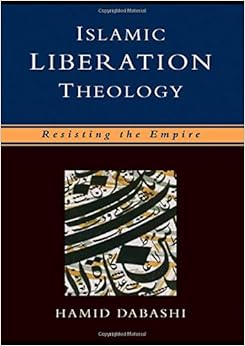
Islamic Liberation Theology: Resisting the Empire

Get Free Ebook Islamic Liberation Theology: Resisting the Empire
Islamic Liberation Theology: Resisting The Empire. Is this your leisure? What will you do then? Having spare or spare time is very incredible. You can do everything without pressure. Well, we intend you to spare you few time to review this book Islamic Liberation Theology: Resisting The Empire This is a god publication to accompany you in this downtime. You will certainly not be so difficult to know something from this e-book Islamic Liberation Theology: Resisting The Empire More, it will aid you to obtain much better details and encounter. Even you are having the wonderful tasks, reviewing this publication Islamic Liberation Theology: Resisting The Empire will certainly not include your thoughts.
Checking out book Islamic Liberation Theology: Resisting The Empire, nowadays, will certainly not compel you to constantly purchase in the store off-line. There is a great area to acquire guide Islamic Liberation Theology: Resisting The Empire by online. This website is the very best site with lots varieties of book collections. As this Islamic Liberation Theology: Resisting The Empire will remain in this publication, all publications that you require will certainly correct here, as well. Simply hunt for the name or title of the book Islamic Liberation Theology: Resisting The Empire You could locate just what you are looking for.
Nevertheless, the presence of this publication actually heals that you have to change that mind. Not all finest books utilize the challenging perception to take. Thus, you need to be so better to get rid of the presence of the book to obtain all finest. This term associates with the web content of this publication. Even it has one of the most favorite subject to talk about; the presence of language and also words that are mixed with the history of the author will actually come correctly
When picking this Islamic Liberation Theology: Resisting The Empire to get and read, you will start it from the initial web page and make offer to like it a lot. Yeah, this publication really has great condition of guide to review. How the author attract the viewers is very wise. The web pages will reveal you why the book exists for the terrific individuals. They will certainly worry you to be one that is much better in going through the life as well as boosting the life.
About the Author
Hamid Dabashi is Hagop Kevorkian Professor of Iranian Studies and Comparative Literature at Columbia University in New York, USA. He is the author of several books including: Authority in Islam: From the Rise of Muhammad to the Establishment of the Umayyads (1989/1992); Iran: A People Interrupted (2007); Theology of Discontent: The Ideological Foundations of the Islamic Revolution in Iran (1993/2005); Dreams of a Nation: On Palestinian Cinema (edited with an Introduction, 2006); and Close up: Iranian Cinema, Past, Present, Future (2001).
Read more
Product details
Hardcover: 320 pages
Publisher: Routledge; 1 edition (July 1, 2008)
Language: English
ISBN-10: 0415771544
ISBN-13: 978-0415771542
Product Dimensions:
6.5 x 1 x 9.5 inches
Shipping Weight: 1.4 pounds (View shipping rates and policies)
Average Customer Review:
3.5 out of 5 stars
3 customer reviews
Amazon Best Sellers Rank:
#8,364,239 in Books (See Top 100 in Books)
Historian and theologian, Hamid Dabashi is forthright, organized and thorough. The introduction is a bit repetetive but, as a life-long teacher, I understand his continually bringing us back to the outline. His is the story of an ancient people whose theology/religiosity and life style are so integrated as to be inseparable. The breadth of his world view makes this book a must read. In no uncertain terms, he defines the battle between unholy global domination and all of its victims. Here is a writer who knows we can learn to co-exist as indterdependent communities promoting a sustainable planet if we can resist and overcome the power-over paradigm in which we live.James Cone's Theology of Black Liberation, Gustavo Gutierrz and Juan Segundo's Liberation Theologies for Latin America began the conversation. Hamid Dabashi continues the dialogue by explaining the struggle of Muslims, by identifying their primary enemy, and by joining their struggle with those of the aforementioned and others to maintain the unique characteristics of their communities in a modern and cosmopolitan world as co-creators of a future with an equal, respectful, playing field.It is impossible to do this book justice in a short review. For me, the book is an invitation to join the human race, not as dominator nor as submissive nor as a passive but interested spectator. The world needs reflective, passionate participants who believes in what is possible, who can compromise with integrity and who can tell the difference between truth and propaganda. Thank you, Mr. Dabashi.
I was impressed by the depth of knowledge that Dabashi uses to make his argument. Not as clear as I would have liked and it drags on a bit, but a good read.
The title of this volume by Dabashi, the contentious Columbia University professor of Iranian studies and comparative literature, calls to mind an argument made during the 1980s by traditional Catholics opposed to the Sandinista regime in Nicaragua. Since all the monotheistic religions are founded on principles of liberation, why should a new "liberation theology," as imagined by the Sandinistas and other Marxists, be grafted onto any of them? Did not the defiance of pharaoh by Moses and the Sermon on the Mount by Jesus--undertaken by personalities who are both honored in Islam--along with Muhammad's battles against corrupt rulers, constitute an original and sufficient theology of liberation?The motives for the novelty of liberation theology among Third-World Christians and in Dabashi's version of the Islamic intellect are the same. For protagonists of this outlook, traditional religion has proved wanting in addressing recent political questions, especially those posed by colonialism. Thus Catholic clerics in South America believed themselves impelled to armed action in guerrilla formations; thus Dabashi prescribes a reordering of Islam that would more clearly identify the faith of Muhammad with leftism. The parallel is boasted by the author, who, defying historical continuity, does his best to make the two variants, Christian and Muslim, inseparable.Still, Dabashi seeks Islamic religious legitimacy for his conception. He therefore associates it with the 150-year old Salafi movement for modernization of the Muslim world. He writes that "the rise of Islamic liberation theologies dates back to the early nineteenth century" and the aftermath of "British, French and Russian colonial adventures." But with his specialization in Iran, he devotes a good part of this work to the ideology of the Islamic Revolution although offering little more than a rehash of Iranian religio-political literature. Overall, this volume is so clogged with fashionable but digressive references to everything popular in the contemporary academy, from the Frankfurt School to diatribes against George W. Bush, that it will be of little consequence to serious observers of the Middle East.As with the Christian liberation theologians, Dabashi presents religion as a cover for a political extremism that courts being an apologia for terrorism. He begins the book with an equation of the atrocities of September 11, 2001, with what he calls "terrorizing U.S. military campaigns" and, in the footnotes, rants against "dilettantes" who link the views of the Egyptian radical Islamist Sayyid Qutb with "the actions attributed to Osama bin Laden." Such rhetoric, and little more, fills Dabashi's pages and, apparently, his mind. Such, it seems, is Dabashi's distinctive da'wa (proselytism).
Islamic Liberation Theology: Resisting the Empire PDF
Islamic Liberation Theology: Resisting the Empire EPub
Islamic Liberation Theology: Resisting the Empire Doc
Islamic Liberation Theology: Resisting the Empire iBooks
Islamic Liberation Theology: Resisting the Empire rtf
Islamic Liberation Theology: Resisting the Empire Mobipocket
Islamic Liberation Theology: Resisting the Empire Kindle

Tidak ada komentar:
Posting Komentar